WANT TO SAVE THIS RECIPE?
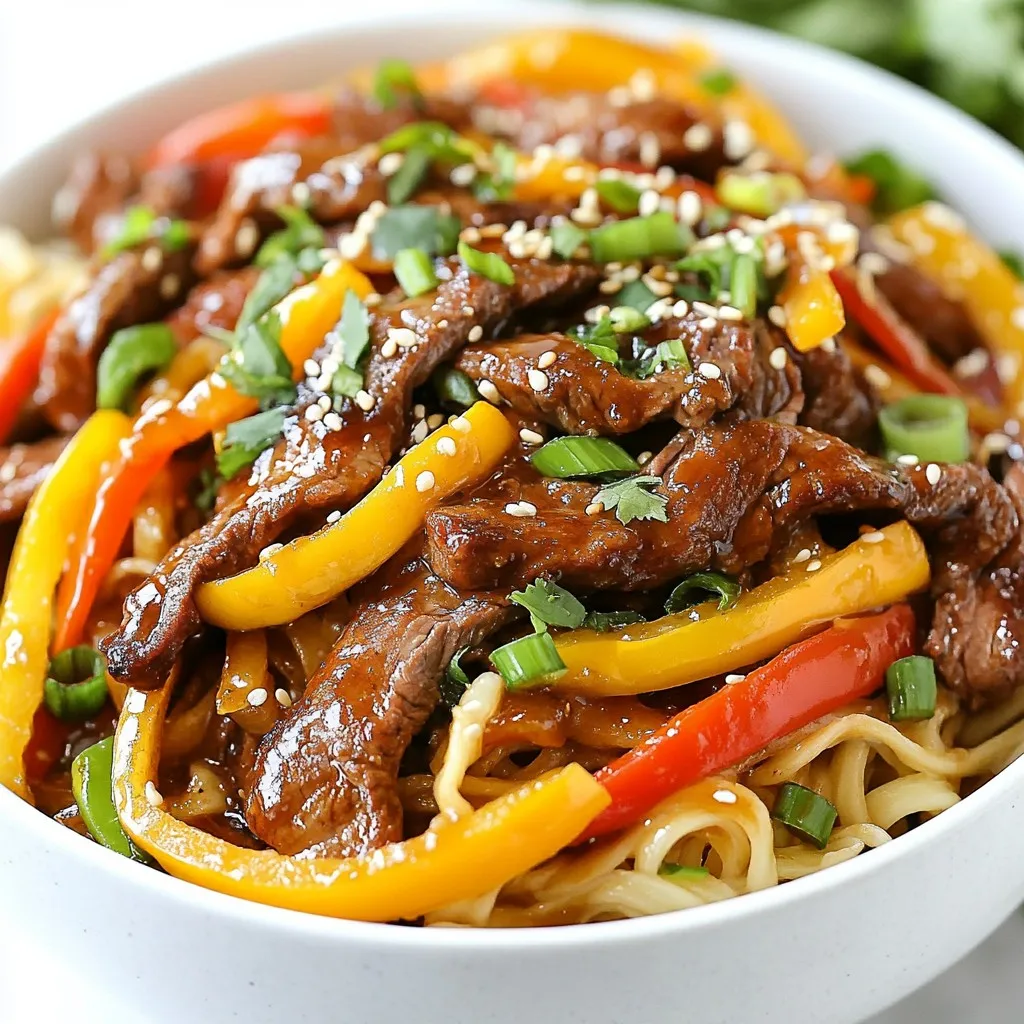
Are you craving a hearty meal that’s both tasty and simple? Look no further! This Mongolian Beef Noodles recipe packs a punch of flavor and takes just a few steps. With a blend of tender flank steak, chewy rice noodles, and fresh veggies, you’ll whip up a dish that’s sure to impress. Let’s dive into this easy recipe that will make your taste buds dance!
Why I Love This Recipe
- Quick and Easy: This recipe can be prepared in just 30 minutes, making it perfect for a weeknight dinner.
- Flavor Packed: The combination of soy sauce, ginger, and sesame oil creates a rich and savory flavor that’s irresistible.
- Customizable: You can easily swap out vegetables or proteins to match your preferences or what you have on hand.
- One-Pan Meal: Everything cooks in one skillet, making cleanup a breeze while still delivering a hearty dish.
Ingredients
Main Ingredients
– 8 oz rice noodles
– 1 lb flank steak
– 1 tablespoon cornstarch
– 2 tablespoons vegetable oil
Vegetables and Aromatics
– 1 onion, sliced
– 3 cloves garlic, minced
– 1 inch ginger, grated
– 1 bell pepper (red or green)
– 3 green onions, chopped
Sauces and Seasonings
– 1/4 cup soy sauce
– 2 tablespoons brown sugar
– 1 tablespoon sesame oil
– 1 teaspoon red pepper flakes (optional)
– Salt and pepper to taste
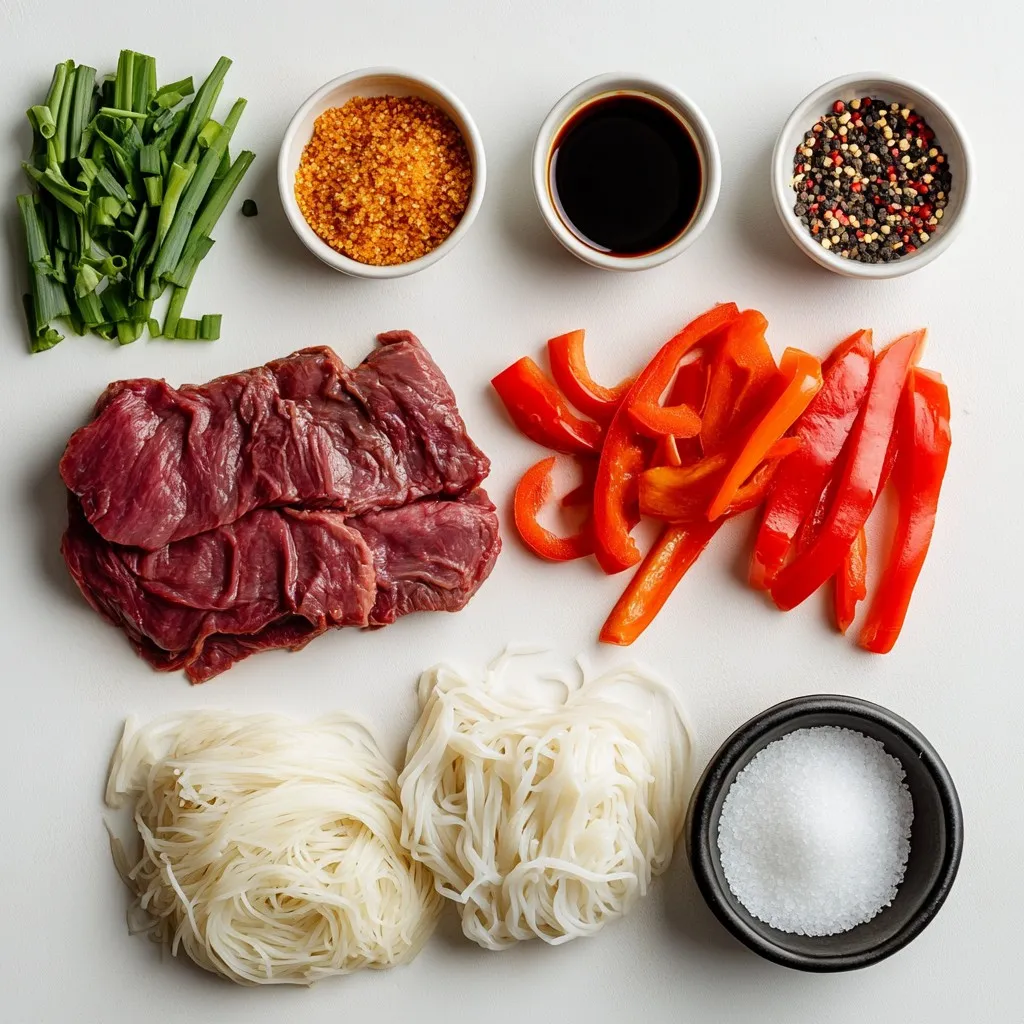
Gathering the right ingredients is key to making Mongolian Beef Noodles. Start with the rice noodles, which give the dish its base. They cook fast and soak up all the flavors.
For the beef, I recommend flank steak. It has great flavor and tenderness. A quick coat of cornstarch helps the beef get crispy when cooked.
Next, grab some fresh vegetables. Sliced onion, minced garlic, and grated ginger bring a nice aroma to the dish. Add a bell pepper for a pop of color and crunch. Don’t forget green onions; they add freshness and a bit of zing.
Now, let’s talk sauces. Soy sauce is a must for that savory kick. Brown sugar adds sweetness, balancing the saltiness. A dash of sesame oil gives a rich, nutty flavor. If you like heat, throw in some red pepper flakes. And of course, season with salt and pepper to taste.
These ingredients come together to create a delicious and vibrant meal. You will love how each bite bursts with flavor!
Step-by-Step Instructions
Preparing the Noodles
– Cook rice noodles according to package instructions.
– Drain and set aside.
Cooking rice noodles is easy. Just follow the package. You want them soft but not mushy. After cooking, drain them in a colander. Let them sit while you prepare the other ingredients.
Searing the Beef
– Coat flank steak in cornstarch.
– Heat vegetable oil and sear beef in batches.
Take your flank steak and slice it thinly. Then, put it in a bowl. Sprinkle cornstarch over the beef and toss it well. This helps create a nice crisp when you cook it. Heat vegetable oil in a large skillet. Make sure it’s hot. Add the beef in one layer. Sear for 2-3 minutes until browned. Flip and cook for another 2 minutes. Remove the beef and set it aside.
Stir-Frying Vegetables
– Cook onion, garlic, and ginger.
– Add bell pepper and stir-fry until tender.
In the same skillet, add sliced onion, minced garlic, and grated ginger. Stir-fry for 1-2 minutes until the onion softens. Then, toss in the sliced bell pepper. Cook for another 2-3 minutes. You want the veggies to be bright and tender but still crisp.
Combining Ingredients
– Return beef to the pan along with green onions.
– Mix with sauces and add cooked noodles.
Now, put the cooked beef back in the skillet. Add chopped green onions too. Drizzle soy sauce, brown sugar, and sesame oil over everything. If you like heat, add red pepper flakes. Stir well to coat all ingredients. Gently fold in the cooked rice noodles. Toss everything together for 2-3 minutes until heated through. Adjust flavors by adding salt and pepper to taste.
Tips & Tricks
Achieving the Perfect Texture
To get that nice, crispy texture in your Mongolian Beef Noodles, use cornstarch. Cornstarch coats the beef and helps it fry well. This gives each piece a crunchy bite. Be sure to coat the beef evenly for the best results.
Next, control your heat levels. Heat the oil over high heat. This helps to sear the beef quickly, sealing in juices. If your heat is too low, the beef will steam instead of fry. Keep an eye on it to avoid overcooking.
Flavor Enhancements
You can adjust sweetness and saltiness to suit your taste. If you want it sweeter, add more brown sugar. For salty flavor, drizzle in a bit more soy sauce. Taste as you go to find your perfect balance.
Adding more aromatics can really boost flavor. Consider adding extra garlic or ginger. You might also try adding some chopped chilies for a spicy kick. These simple changes can take your dish to the next level.
Presentation Tips
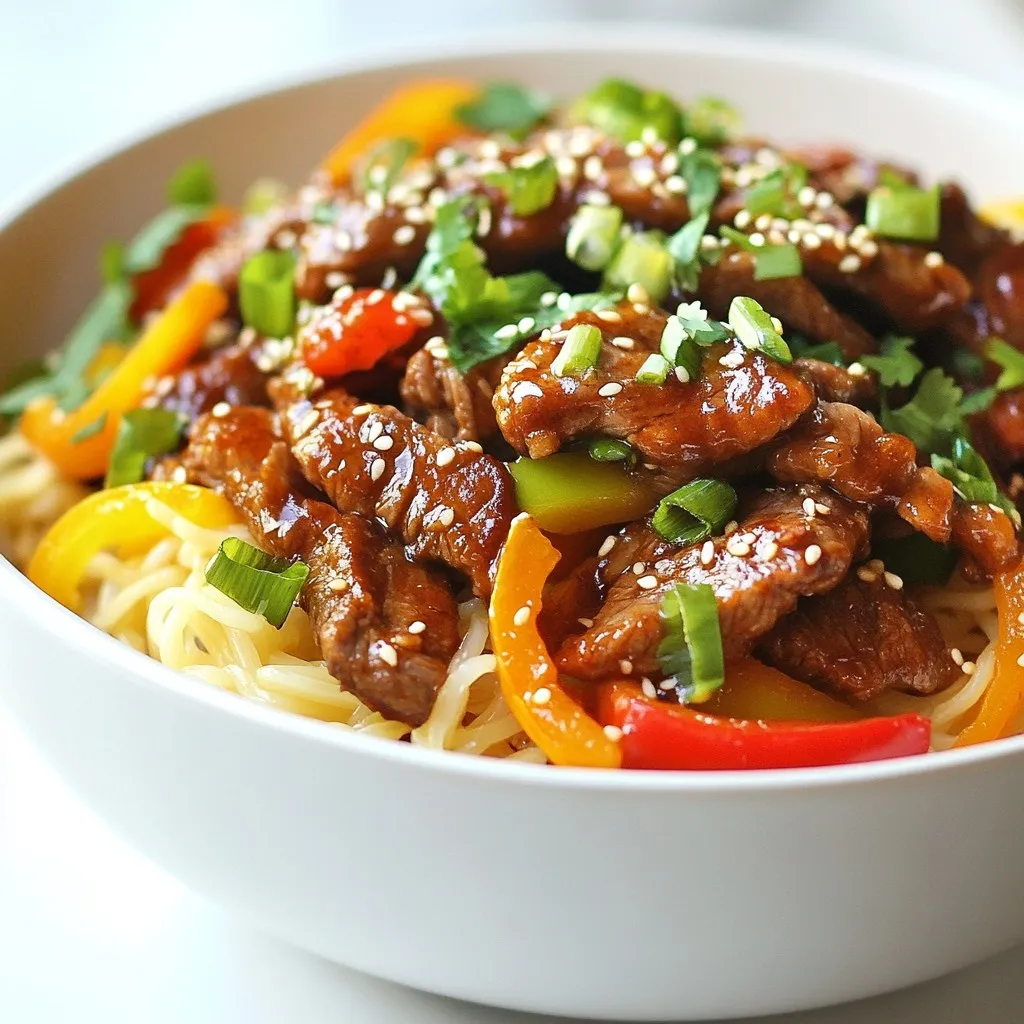
Serve your Mongolian Beef Noodles in large, deep bowls. This makes the dish look inviting. For an appealing touch, garnish with extra green onions and a sprinkle of sesame seeds. These add nice texture and color.
You can also place a few cilantro leaves on top. They give a fresh look and vibrant color. A well-presented dish makes every meal feel special. Enjoy the process of making it pretty!
Pro Tips
- Use High Heat: Cooking the beef over high heat ensures it sears quickly, locking in juices and flavor while achieving a nice caramelization.
- Don’t Overcrowd the Pan: When searing beef, make sure not to overcrowd the pan. This allows for proper browning and prevents steaming.
- Customize Your Veggies: Feel free to add or substitute other vegetables like snap peas or carrots to suit your taste preferences.
- Adjust the Sauce: Taste the sauce before serving and adjust the sweetness or saltiness by adding more sugar or soy sauce as needed.
Variations
Protein Alternatives
You can easily swap the flank steak for chicken or tofu. Chicken works great when it’s sliced thin and cooked quickly. Tofu is perfect for a vegetarian option. Use firm tofu, press it, and slice it into cubes. This will soak up the flavors well.
Vegetable Substitutions
Feel free to add more veggies to your dish. Broccoli, snap peas, or carrots can add color and crunch. You can also use seasonal veggies like zucchini or asparagus in spring. This keeps your meal fresh and exciting.
Spice Levels
If you like heat, add more red pepper flakes. You can also try chili oil for an extra kick. For milder flavors, skip the red pepper flakes or use sweet chili sauce. Adjusting spice levels lets you customize the dish to your taste.
Storage Info
Short-term Storage
To keep your Mongolian Beef Noodles fresh, store leftovers in an airtight container. Place the container in the fridge. This will help keep the flavors intact. You should eat the leftovers within three days for the best taste. After that, the quality may decline.
Reheating Tips
When you reheat your noodles, you want to keep them tasty. Use a skillet over medium heat. Add a splash of water or broth to prevent drying out. Stir often. Avoid the microwave if you can. It can make the noodles tough. Always check for even heating before serving.
Freezing Guidelines
If you want to save some for later, freezing is a good option. Divide the noodles into portions and place them in freezer bags. Press out as much air as you can before sealing. When you’re ready to eat, thaw the noodles in the fridge overnight. Reheat them in a skillet with a bit of oil. This will help keep the texture nice.
FAQs
What is the origin of Mongolian Beef Noodles?
Mongolian Beef Noodles come from Mongolian cuisine, but they are not truly Mongolian. This dish blends Chinese flavors and cooking styles. It features tender beef and veggies, all tossed with savory noodles. The term “Mongolian” often ties to the cooking style rather than the actual origin. Many people enjoy this dish for its bold and rich taste.
Can I use other types of noodles?
Yes, you can use other types of noodles. If you want a different texture, try egg noodles or udon noodles. Both options work well in this dish. Just cook them according to package directions before adding them to the mix. This way, you can enjoy the flavors with your preferred noodle type.
What can I serve with Mongolian Beef Noodles?
You can serve Mongolian Beef Noodles with many sides. Here are some great options:
– Steamed broccoli
– Stir-fried bok choy
– Crispy spring rolls
– A fresh cucumber salad
These sides add color and balance to your meal. They also enhance the Asian flavors of the dish.
How can I make this dish gluten-free?
To make Mongolian Beef Noodles gluten-free, swap soy sauce for tamari. Tamari is a gluten-free soy sauce alternative. You can also use rice noodles, which are naturally gluten-free. Ensure all other ingredients are gluten-free too. This way, everyone can enjoy this tasty dish without worry.
Can I meal prep Mongolian Beef Noodles?
Yes, you can meal prep Mongolian Beef Noodles. Cook the dish and let it cool before storing. Use airtight containers to keep it fresh. Store in the fridge for up to three days. When ready to eat, reheat in the microwave or on the stovetop. This makes for a quick, delicious meal later.
How do I know if the beef is cooked properly?
To check if the beef is cooked properly, look for a nice brown color. The beef should be tender and not chewy. Use a meat thermometer to ensure it reaches 145°F (63°C). This guarantees it is safe to eat. If you’re unsure, cut a piece in half to check. If it is still pink, cook it a bit longer.
This blog covered all you need to know about making Mongolian Beef Noodles. We discussed key ingredients, from rice noodles to flank steak, and how to stir-fry them perfectly. You now have tips for taste and texture, along with variations to suit your needs. Remember, this dish is flexible. You can swap proteins or spices for your favorite flavors. Enjoy experimenting with your new skills, and savor the delicious result
Mongolian Beef Noodles
A savory dish featuring tender flank steak, rice noodles, and a flavorful sauce.
Course Main Course
Cuisine Asian
Servings 4
Calories 500 kcal
- 8 oz rice noodles
- 1 lb flank steak, thinly sliced
- 1 tablespoon cornstarch
- 2 tablespoons vegetable oil
- 1 onion, sliced
- 3 cloves garlic, minced
- 1 inch ginger, grated
- 1 bell pepper, sliced (red or green)
- 3 green onions, chopped
- 1/4 cup soy sauce
- 2 tablespoons brown sugar
- 1 tablespoon sesame oil
- 1 teaspoon red pepper flakes (optional)
- Salt and pepper to taste
Begin by cooking the rice noodles according to package instructions. Drain and set aside.
In a medium bowl, toss the sliced flank steak with cornstarch until well coated.
Heat vegetable oil in a large skillet or wok over high heat. Once hot, add the beef in a single layer. Sear for 2-3 minutes until browned, then flip and cook for another 2 minutes. Remove from pan and set aside.
In the same skillet, add the sliced onion, garlic, and grated ginger. Stir-fry for 1-2 minutes until fragrant and the onion begins to soften.
Add the sliced bell pepper and continue to stir-fry for another 2-3 minutes until vegetables are tender-crisp.
Return the cooked beef to the skillet and add the chopped green onions. Drizzle with soy sauce, brown sugar, sesame oil, and red pepper flakes (if using). Stir to combine all ingredients evenly.
Gently fold in the cooked rice noodles and toss everything in the sauce for about 2-3 minutes until well mixed and heated through.
Season with salt and pepper to taste. Adjust sweetness or saltiness if needed by adding more sugar or soy sauce.
Serve in large bowls, garnished with green onions and sesame seeds.
Keyword Asian, beef, noodles, stir-fry
WANT TO SAVE THIS RECIPE?